

Moving from a house to an apartment can feel like a big step — fewer rooms, less storage, and a lot of decisions about what stays and what goes. It can also be freeing: less upkeep, no yard work, and more time for the things you enjoy. Whether you are an empty nester, simplifying after a life change, or trading a long commute for a more central location, this guide walks through downsizing from a house to an apartment in Memphis step by step, with examples from the floor plans at The Enclave Apartment Homes in Hickory Hill.
Why people downsize to apartments
- Less maintenance. In an apartment, many repairs are handled by the property team. At The Enclave, residents submit maintenance requests through the online resident portal.
- Amenities without the upkeep. Instead of maintaining a pool or home gym, you can use the property’s swimming pool, fitness center, tennis court, and clubhouse.
- Predictable monthly costs. Rent replaces many unpredictable homeowner expenses, although you still need to budget for utilities and renters insurance.
- Location. A move can put you closer to family, work, or the places you go most.
Step 1: Pick your floor plan first
Downsizing is easiest when you know exactly how much space you are moving into. Choose the floor plan before you decide what to keep.
- 1-bedroom / 1-bath, 689 sq ft — starting from $910. Best for one person or a couple who are ready to keep only the essentials.
- 2-bedroom / 2-bath, 1,014 sq ft — starting from $1,055. Leaves room for a guest bedroom, home office, or hobby room, plus a second bathroom for visitors.
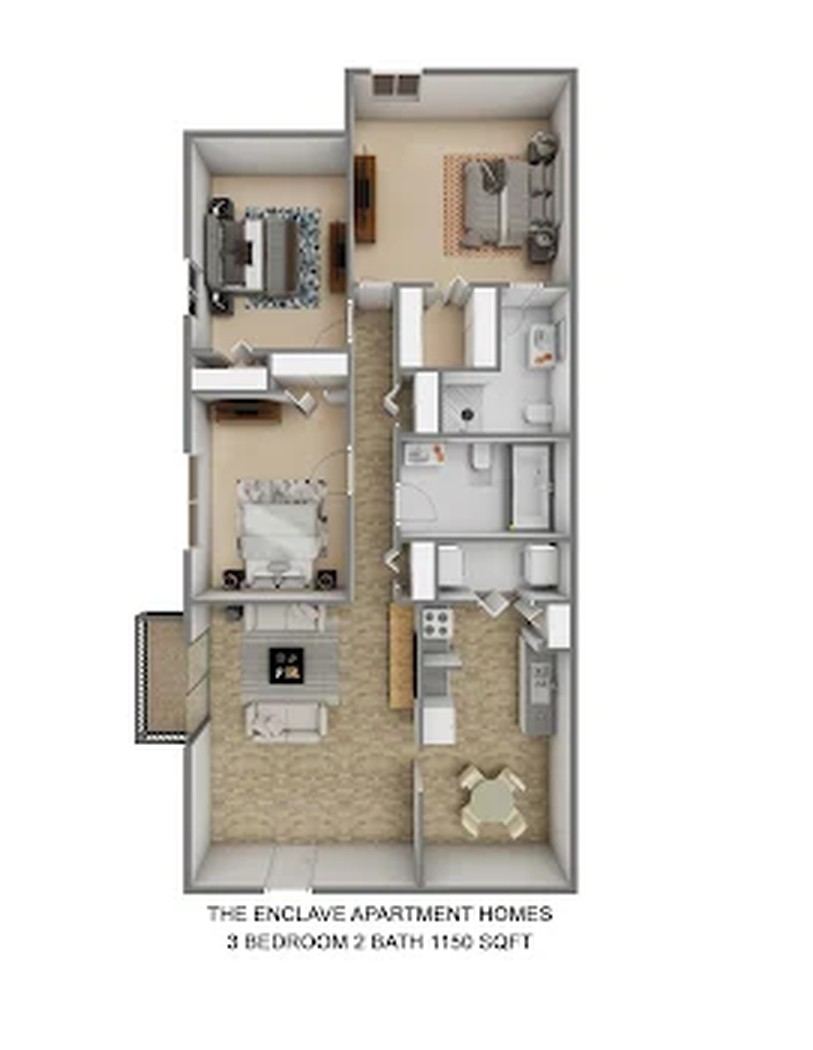
- 3-bedroom / 2-bath, 1,150 sq ft — starting from $1,180. A gentler transition if you are leaving a larger home or still have family living with you.
Pricing is subject to change and monthly service charges may apply. Study the drawings on the floor plans section and bring a tape measure to your tour.
Step 2: Measure what you have against what will fit
- Measure your large furniture: sofas, beds, dressers, dining tables, desks, and bookshelves.
- Sketch each room of the new apartment with its dimensions.
- Place furniture on paper or use painter’s tape on your current floor to mark the new room size.
- Leave walking space around beds, tables, and doorways.
Pieces that do not fit — or that make a room feel crowded — go on the sell or donate list. Very large sectionals and oversized dining sets are common items that do not make the move.
Step 3: Sort everything into four categories
Go room by room. Start with spaces that have fewer sentimental items, such as the garage, laundry room, or guest bathroom, and save photos and keepsakes for last.
- Keep — you use it regularly and it fits.
- Give to family — heirlooms and items someone has asked for.
- Sell or donate — good-condition items you no longer need.
- Recycle or discard — broken, expired, or worn-out items.
Questions that make decisions easier
- Have I used this in the past year?
- Do I have more than one that does the same job?
- Would I buy this again today?
- Is there a place for it in the new floor plan?
Step 4: What to do with what you are not keeping
Selling
Online marketplaces and neighborhood groups work well for furniture and appliances. Meet buyers in safe, public places when possible, and have someone with you for large pickups at your home.
Donating
Habitat for Humanity of Greater Memphis operates ReStore locations that accept donated furniture, appliances, and building materials, including a store on Winchester Road in Memphis and one in Collierville. Check its website for current accepted items and drop-off hours. Thrift stores, faith communities, and shelters may also accept household goods.
Handling sentimental items
- Photograph items you love but cannot keep.
- Choose one display piece instead of a full collection.
- Scan photos and documents to save space.
- Offer family members first choice of heirlooms.
Step 5: Plan for the storage you will have
Apartments typically have less closet and garage space than a house. Plan ahead:
- Use under-bed storage and vertical shelving.
- Choose furniture that does double duty, such as an ottoman with storage.
- Store off-season clothing in labeled bins.
- Keep only the tools you will actually use — a basic toolkit usually covers apartment needs.
Our small apartment storage guide has room-by-room ideas. If you are not ready to part with something, a short-term self-storage unit can buy time, but be honest about the monthly cost.
Step 6: Adjust your budget
Renting changes your monthly costs. Many homeowner expenses — property taxes, major repairs, lawn care — go away, while rent, renters insurance, and any monthly service charges take their place. Utilities are usually lower in a smaller space, but they still need a line in your budget. Use our rent affordability guide and move-in budget worksheet to plan.
If you are selling a home, talk with a real estate or tax professional about timing so you are not paying for two places longer than necessary.
Step 7: Plan the move
- Book movers early and tell them you are downsizing; a smaller load may cost less. See our movers vs. DIY guide.
- Label boxes by room in the new apartment, not the old house.
- Pack an essentials box with medications, documents, chargers, toiletries, and bedding.
- Set up MLGW service to start on move-in day.
- Buy renters insurance — a property’s insurance typically does not cover your belongings.
Step 8: Settle in and make it yours
- Unpack the bedroom and kitchen first.
- Hang familiar art and photos using renter-friendly methods; see our decorating guide.
- Explore the property and neighborhood: Lichterman Nature Center, The Links at Fox Meadows, and May Park are nearby, and Hickory Ridge Mall, Parkway Village Shopping Center, and Saddle Creek are among the shopping destinations around the community.
- Introduce yourself to neighbors at the pool or clubhouse.
Questions to ask on your tour
- Which floor plans are available for my move date?
- What monthly service charges apply?
- How are maintenance requests handled?
- Where can a moving truck park on move-in day?
- What are current office hours? (Please call to confirm.)
Start your next chapter
Downsizing is easier when you can see the space you are moving into. Schedule a tour at The Enclave, call (901) 795-4000, or apply online when you are ready.
Frequently asked questions
Which Enclave floor plan is largest?
The 3-bedroom / 2-bath at 1,150 square feet, starting from $1,180. Pricing is subject to change.
Where can I donate furniture in Memphis?
Habitat for Humanity of Greater Memphis ReStore locations accept donated furniture and appliances; check its website for accepted items and hours.